Kid Dynamite: the unbearable darkness of being Mike Tyson
October 15, 2026
A new Netflix documentary about the former world heavyweight champion Mike Tyson reminds me (once again) how laughable it was for me to even fantasise about being a fighter when I was a slip of a youth, pouring through my copies of Ring Magazine and Boxing Illustrated to learn about legends like Barney Ross or Henry Armstrong. It goes without saying that I could never possibly have survived in Tyson’s world of cruel family dysfunction, street crime, drugs, and juvenile detention centres. Hell, I couldn’t even have survived in the much more gentle but ultimately tragic world of Johnny Owen.
As it happens, the closest I ever came to fulfilling my dream was in the form of the fantasy fights I scribbled down in a notebook when I was a teenager, in which some unrecognisably brave and powerful pugilist going by the name “R. Dog” overcame all the odds - including biased referees, hostile crowds, terrible injuries and the occasional brutal knockdown - to defeat all the top middleweights and light-heavyweights of his era (I was never arrogant enough to assume I could have been a heavyweight). As I got older, I would imagine retiring in disgust after a hometown decision in favour of my opponent (usually someone like Sven Ottke), only to make a heroic comeback in a higher weight division five years later.
As a milksop intellectual, it also goes without saying that I wouldn’t have had a hope in hell of fending off Tyson in a fight, even after years of intensive training, but I might have been able to pretend I was smarter than him. No longer. In Netflix’s three-part Tyson, his emotional intelligence is humbling, and his articulacy even now reflects not only the influence of bumptious braggarts like his early mentor Cus D’Amato and his crooked promoter Don King, but also the twenty years or so he has spent in therapy, trying to understand his miserable childhood, his rapid rise to superstardom and all the unfathomable mayhem he experienced thereafter.
Asked about the tragic death of his infant daughter back in 2005, Tyson asks for a handkerchief and says, “I’m still working on that.”
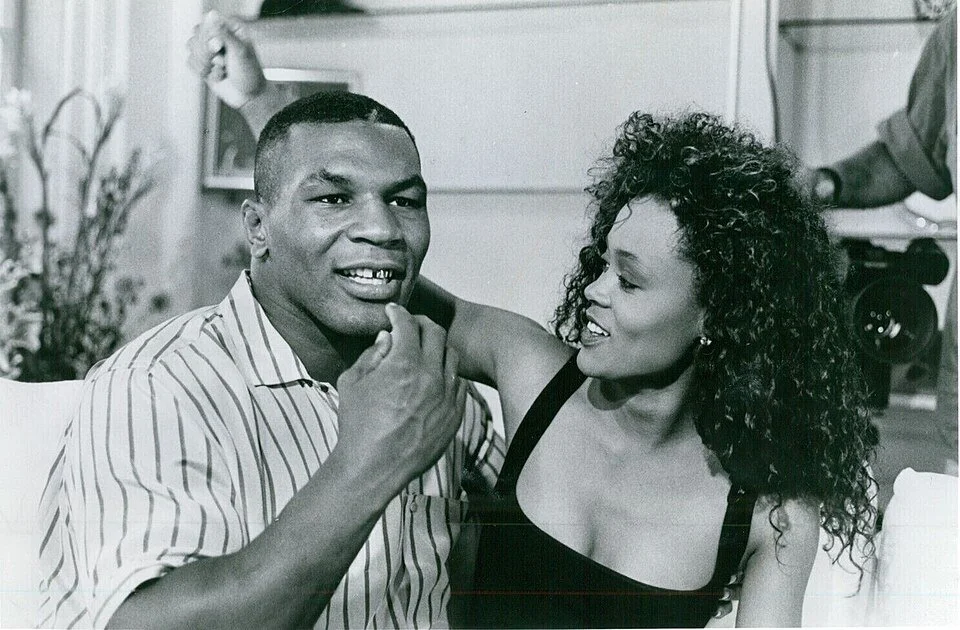
Floyd Russ’s documentary brings back some (but far from all) of the lurid details of Iron Mike’s ludicrous rollercoaster of a life: his street fight with Mitch “Blood” Green; his car crash of a marriage with actress Robin Givens (which included a genuine car crash); his 1992 rape conviction and jailhouse conversion to Islam; his sobering encounters with the IRS; his use of the Whizzinator™ to pass his pre-fight drug tests; and his promise to eat the children of Lennox Lewis.
“Don’t worry about it,” Lewis told his mother at the time, “it’s just jail talk.” Languid Lennox recalls the mass brawl that erupted in their pre-fight press conference in the early summer of 2002, when Tyson sunk his teeth into his thigh. “I was a nut back then,” Tyson concedes.
Tyson is asked again: “Why did you bite him?” “I dunno. I was just being a dick.”
The documentary makes it pretty clear that Tyson’s tumultuous and dissolute private life was to blame for his shocking first defeat in Tokyo in 1990. Various acolytes are wheeled on to say the “real” and unbeatable Iron Mike wasn’t in the ring that night, his prodigious skills already blunted by all those years of excess, not to mention the marathon sex sessions he claimed to have conducted in the days before the contest.
It was by far the most shocking upset of my lifetime, but little room is left to point out that James “Buster” Douglas was probably the worst possible opponent for a weakened Tyson; a big, strong and towering Buster Douglas with his long and spearing left jab; a Buster Douglas desperate to prove a point; a Buster Douglas inspired by the recent death of his mother. Interviewed for the documentary, Douglas’ lip quivers and his voice falters and a trace of a tear bubbles in his right eye as he recalls his greatest night of glory.
“Why did you lose that fight?” an ageing, wearily wise Mike Tyson is then asked. “Because he kicked my ass, that’s why.” Tyson’s voice is broken by a thousand wars and his face is now almost beautiful, an ancient artefact unearthed from the ruins and cracked like clay in heat.
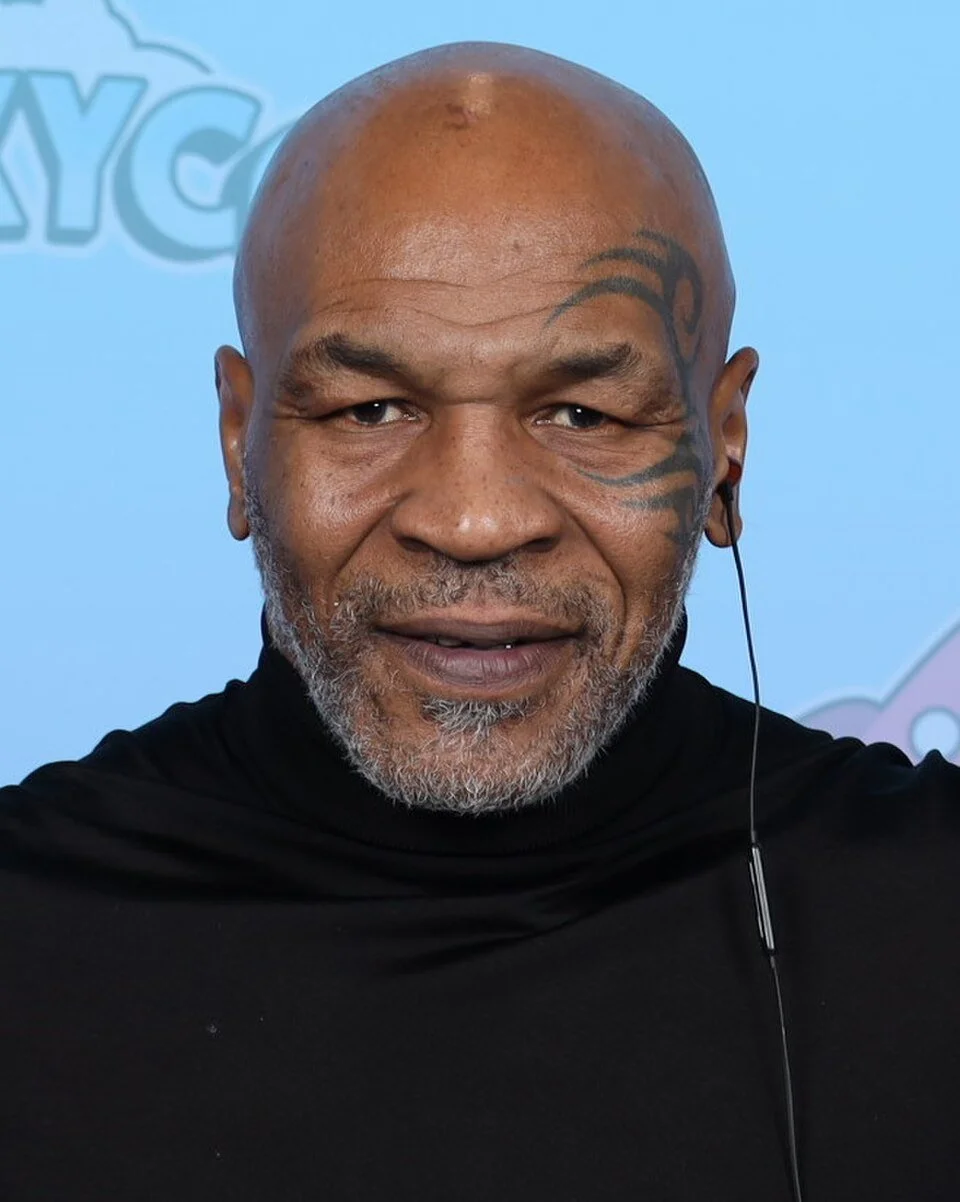
Mike Tyson in 2023
We eventually get to Tyson’s notorious second fight with Evander Holyfield. What is sometimes forgotten is how dirty Holyfield fought in the first two rounds, and what a filthy boxer he was for much of his career. He got away with a series of vicious headbutts that left Tyson bleeding.
We are shown the elderly Tyson’s reaction as he watches the fight back. As his younger self bites that infamous chunk out of Holyfield’s ear, he winces and says, “Oh fuck.” Tyson is then shown contemporary footage of Bill Clinton at a podium saying he was “horrified” by the bite. Tyson smiles ruefully and says, “Oh really? Look who’s talking.”
Above all, and like all such retrospectives, Netflix’s Tyson reminds us of the heartbreaking ravages of time. And in boxing, time seems to weigh even more heavily then elsewhere. Tyson was probably washed up before he fought Lewis, but he carried on, and was finally humiliated by the lumbering also-ran Kevin McBride in 2005. “I’m sure I’ll find something to do,” he said as he announced the end to the most bewildering and baffling careers in the craziest of all sports.
Let’s pass over the details of his humbling (but lucrative) comeback at the age of 58 against Jake Paul in 2024, when he survived eight excruciating but mercifully short rounds with as much of his dignity left as he could have hoped for, and merely remember what he told a young YouTuber in the days leading up to the fight:
I don’t believe in the word ‘legacy’. I think that’s just another word for ‘ego’. Legacy means absolutely nothing to me. I’m just passing through. I’m gonna die and it’s gonna be over. Who cares about legacy after that? We’re nothing. We’re dead. We’re dust.